When Delivery Capability Becomes More Important Than Brand Loyalty
Between March and May 2026, we surveyed 387 IT service providers, system houses, and system integrators in Germany and Austria about the current component shortages in the server and storage sectors.
The results clearly show that price increases—in some cases amounting to several hundred percent—along with delivery delays and rapidly changing availability are increasing pressure throughout the entire channel.
Projects are being postponed, sales cycles are lengthening, and partners sometimes have to recalculate quotes multiple times. At the same time, market behavior is changing: availability, transparency, and reliable delivery commitments are becoming increasingly more important than traditional manufacturer loyalty.
Concern:
Bottlenecks are no longer a marginal phenomenon
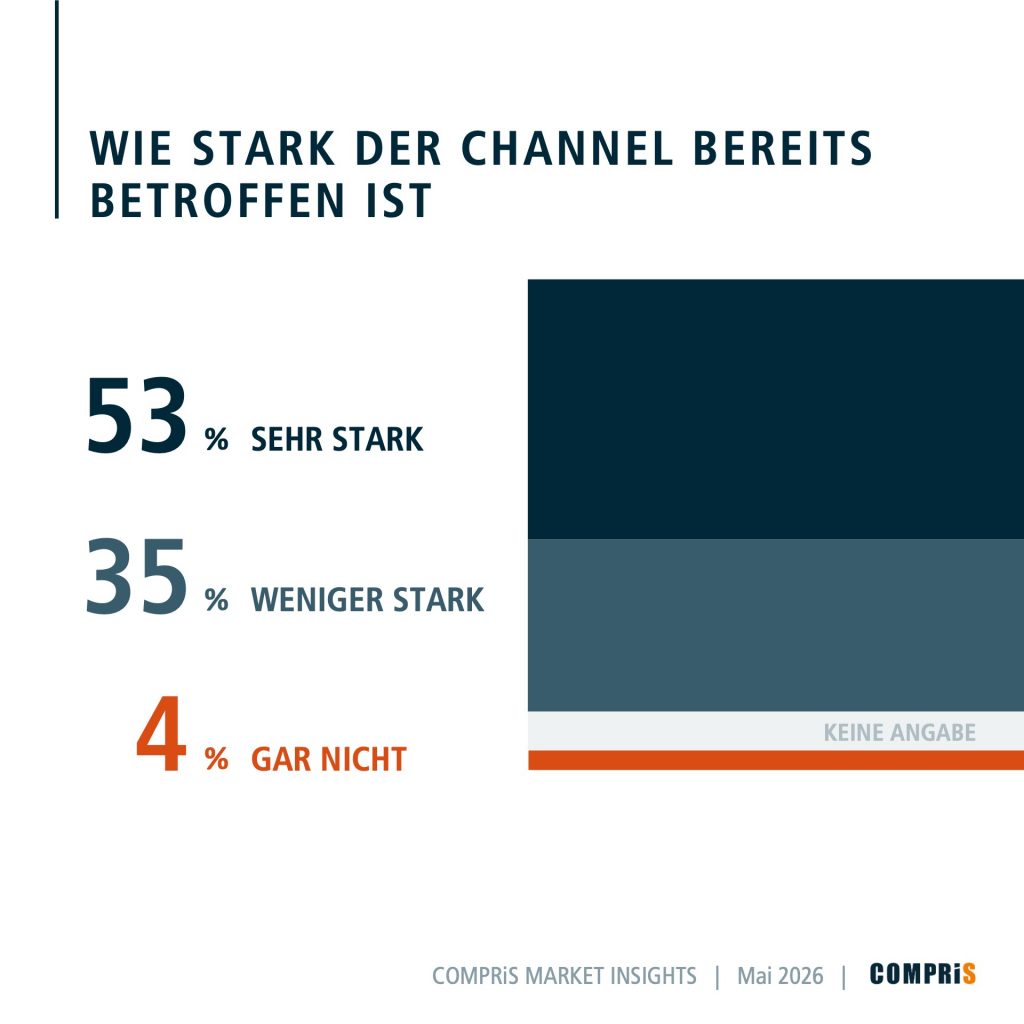
The vast majority of the partners surveyed are already directly affected by component shortages.
88% of system integrators and IT service providers report bottlenecks in their day-to-day operations, with more than half describing them as very severe.
Only 4% say they are not currently affected at all.
For sales and channel managers, this means that component shortages are not isolated incidents, but rather a structural factor that directly impacts go-to-market strategies, forecasting, and pipeline management.
Business‑Impact:
Postponed projects, llonger sales cycles, hgreater effort
The impact of component shortages is clearly felt in day-to-day operations—both in terms of revenue and processes—not only for the Vendor and distributor, but also for the partner.Prices can change within a matter of days or even hours. Quotes must be adjusted multiple times, alternative configurations reviewed, and customer budgets reassessed.
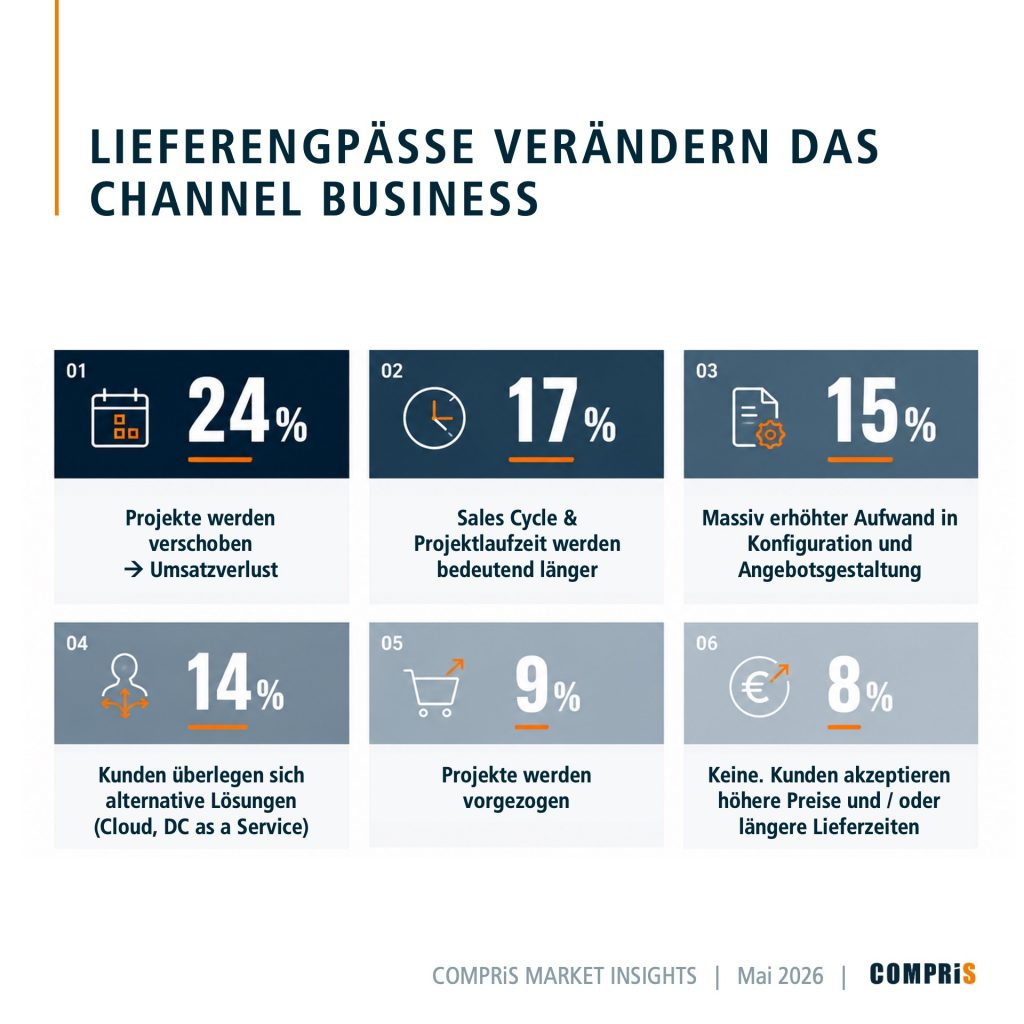
24% of respondents report that projects have been postponed, with corresponding impacts on revenue and planning certainty.
17% report significantly longer sales cycles and project durations.
15% experience a significantly higher workload because they have to update their listings multiple times and check for substitute products.
At the same time, 14% report that customers are becoming more open to alternative models such as cloud or DCaaS solutions.
As a result, initial infrastructure decisions are increasingly shifting away from traditional on-premises investments toward more flexible operating and procurement models. This is not yet a widespread trend—but the development shows that delivery capability and predictability now have a direct influence on architectural and operational decisions. Only 8% of respondents state that their customers largely accept the situation and tolerate higher prices or longer delivery times. At the same time, 5% feel that customer relationships are strained because the channel partner is perceived as responsible for delays.
For Vendor , this means: Anyone who fails to actively support their partners during a bottleneck risks not only the pipeline but also the trust of the end customer.
Choosing a Manufacturer: Availability Trumps Loyalty
Supply chain bottlenecks have a direct impact on how partners evaluate and select manufacturers.
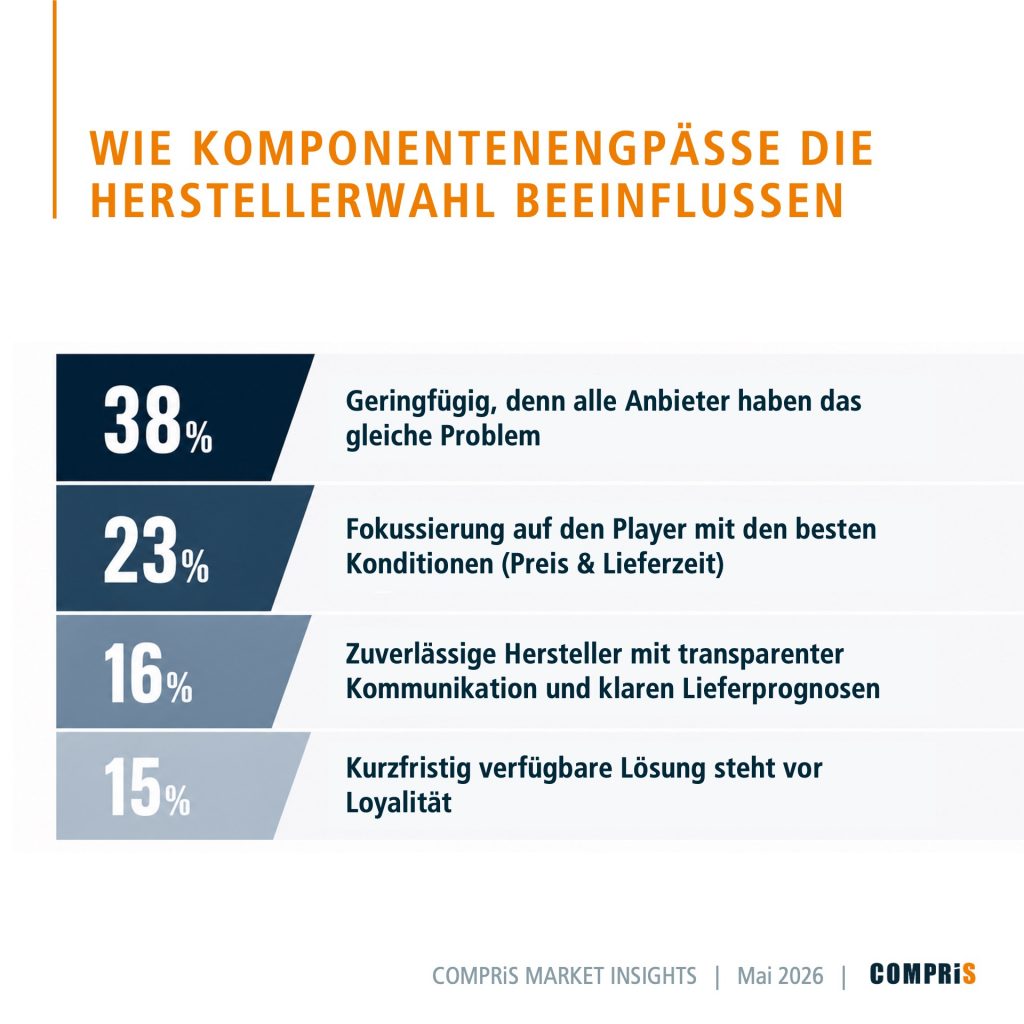
38% of respondents see only minor differences between manufacturers, as they believe that nearly all suppliers are affected by comparable bottlenecks.
At the same time, decision-making behavior within the channel is changing significantly:
23% clearly focus on the provider offering the best combination of price and delivery time.
16% prioritize reliable Vendor with transparent communication and clear delivery forecasts, even if they aren't the cheapest or fastest.
15% explicitly state: Solutions that are available in the short term are currently more important than existing brand loyalty or partner status.
This is noticeably shifting the paradigm in the channel: In many places, the question is no longer just, “Which Vendor do we use strategically?” but increasingly, “Who can actually deliver?” Instead of traditional brand loyalty, the focus is shifting to predictability, transparency, and supply chains that are actually available.
From the Customer's Perspective: Surprise Instead of Preparation
This development is also causing uncertainty among customers in many places.
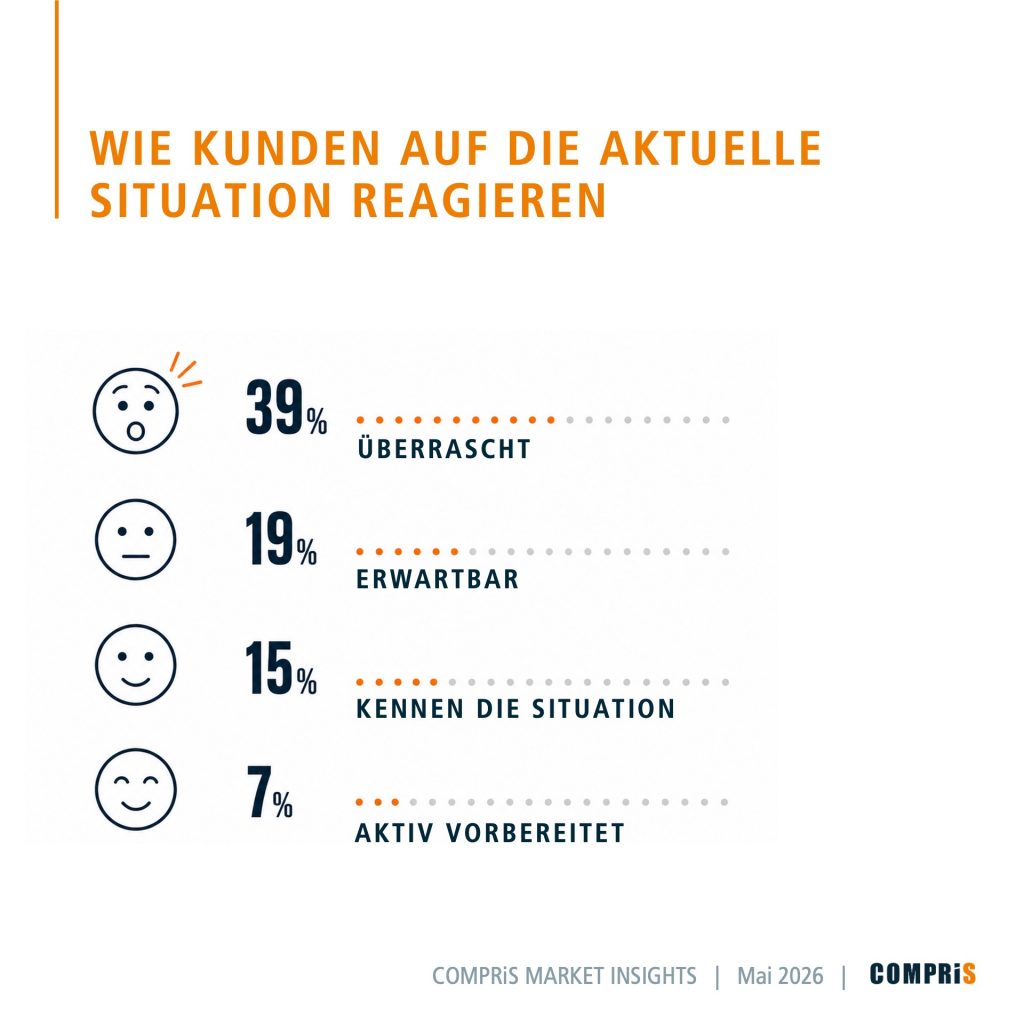
39% of partners report that their customers are reacting with surprise to the current price increases and delivery problems. There is still hardly any coverage of this in traditional media.
Only 7% of customers are actively prepared and consciously prioritize investments and implementations.
19% view this development as expected from the customer's perspective, and 15% have experienced similar situations in the past.
For sales, this means that channel partners today must not only sell solutions, but also explain market and supply chain risks, manage expectations, and systematically identify alternatives on short notice.
OUR CONCLUSION
What does this mean for Sales& Channeldirectors?
The results clearly show that component shortages no longer affect only procurement and logistics, but are also changing sales and partner processes within the channel.
From this, we can identify three key areas of action:
Transparent Pipeline and Supply Chain Communication
Transparent communication regarding delivery capacity, availability, and realistic time frames is becoming increasingly important. Vendor, which provide their partners with timely information, realistic delivery forecasts, and clear scenarios, significantly improve their position in the selection process.
Availability as an Integral Part of the Value Proposition
In many deals today, it’s not just price and technology that matter, but the question: “When can I deliver?”—especially in the infrastructure business. Partners value reliable commitments and robust alternatives.
Channel Enablement in End-Customer Communications
This creates additional pressure for sales teams in the channel: They need sales support materials and best practices to proactively explain project delays, price adjustments, and alternative architectures (e.g., cloud, DCaaS) and to help customers understand them.

For Vendor , this presents an opportunity to work with its partners to establish new service and delivery models that mitigate bottlenecks while ensuring revenue.
GERALD HOLLER - Managing Director COMPRiS GMBH

Our Approach: Market Insights as a Management Tool
With COMPRiS Market Insights, we provide manufacturers and channel managers with a fact-based perspective on how system integrators and IT service providers are experiencing current market changes—from component shortages and the economic situation to AI-driven portfolio development. Based on these insights, we help our clients tailor their go-to-market strategies, partner programs, and sales execution to address their partners’ real pain points.
Those who understand the perspective of their channel partners and their end customers can not only manage bottlenecks but also turn them into opportunities for growth and differentiation.
The results are based on a COMPRiS Market Insights survey of 387 IT service providers, system houses, system integrators, and service providers in Germany and Austria, conducted between March and May 2026.
The survey included managing directors, sales managers, and those responsible for vendor selection and portfolio management.
COMPRiS Market Insights regularly provides data-driven insights into market trends, maturity levels, and challenges in indirect sales and the channel environment.
holistic or selectively?
We support you throughout the entire sales process
You decide on the right mix: from individual, clear and short-term projects to complete sales and budget responsibility for defined segments. From strategy and identifying potential to onboarding and supporting new customers and partners.