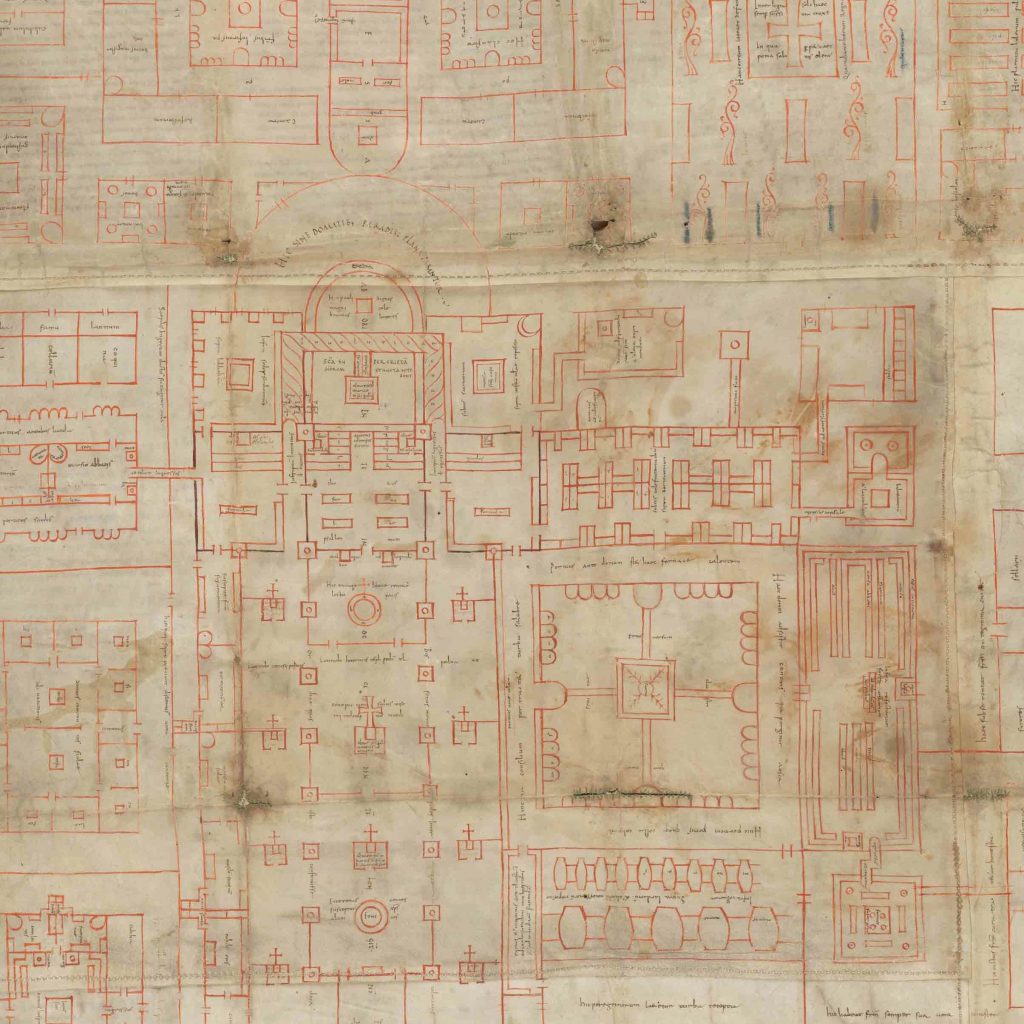
A unique piece of history that is worth supporting.
Did you know that the oldest building plan from the Middle Ages only survived because its reverse side was used as notepaper? Yes, data flows were not always as predictable as they are today. Because a monk used the then 400-year-old paper to document the life of St. Martin, this oldest architectural drawing is still preserved today.
Why are we writing about it? Because we believe that a very special project has emerged that is worth supporting: CAMPUS GALLI. Here, 1200 years later, history is being created piece by piece: the planned monastery in completely traditional construction.
We at COMPRiS are therefore also supporting this unique cultural project financially.
An old plan becomes reality
Since 2013, craftsmen and volunteers have been creating the monastery based on this world-famous St. Gallen monastery plan using 9th century tools. A piece of history is now coming to life here near Meßkirch: without machines, without modern tools. Wooden beams are hewn with axes and the sound of the anvil can be heard from the forge. Everything has to be done by hand, everything is more laborious and slower than today, but it broadens the view of our history.
The history of the monastery plan
The monastery map, with its 52 buildings and many details, has an eventful history. It was created 1200 years ago on the island of Reichenau - drawn on five sheets of parchment that were sewn on one by one. Around 400 years later, a monk used the reverse side to write down the life of St. Martin; if you look closely, you can see the writing shining through in many places. It is only because of this story of St. Martin that the plan has survived, as an unnoticed reverse side.
The medieval building site
Visit Campus Galli - whether with a guided tour, a day trip or with your team as your next development seminar: a truly enriching insight awaits you.